Introduction: Who Pays in a Car Accident? The Complex Reality Behind the Question
Car accidents are an unfortunate but common part of life on US roads. When two vehicles collide, the first thought that rushes through everyone’s mind is: who pays for the damages? This seemingly straightforward question actually opens a door to the intricate and often frustrating world of insurance.
Whether it’s a fender-bender or a serious crash, understanding who is financially responsible is crucial to getting your vehicle fixed, covering medical bills, and ensuring you aren’t left with unexpected expenses. But the answer isn’t always simple or immediate.
In the US, laws differ by state, coverage types vary wildly, and determining fault often becomes a convoluted process. Throw in insurance companies with their own interests, paperwork that never ends, and sometimes surprising denials, and you have a maze that leaves many drivers overwhelmed and anxious.
In this article, we’re going to unpack who pays in a car accident, peel back the layers of insurance, reveal common traps, and share tips to help you navigate this challenging situation wisely in 2025.
How Car Insurance Works: The Basics
To understand who pays, you first need to grasp the basics of car insurance and the types of coverage involved.
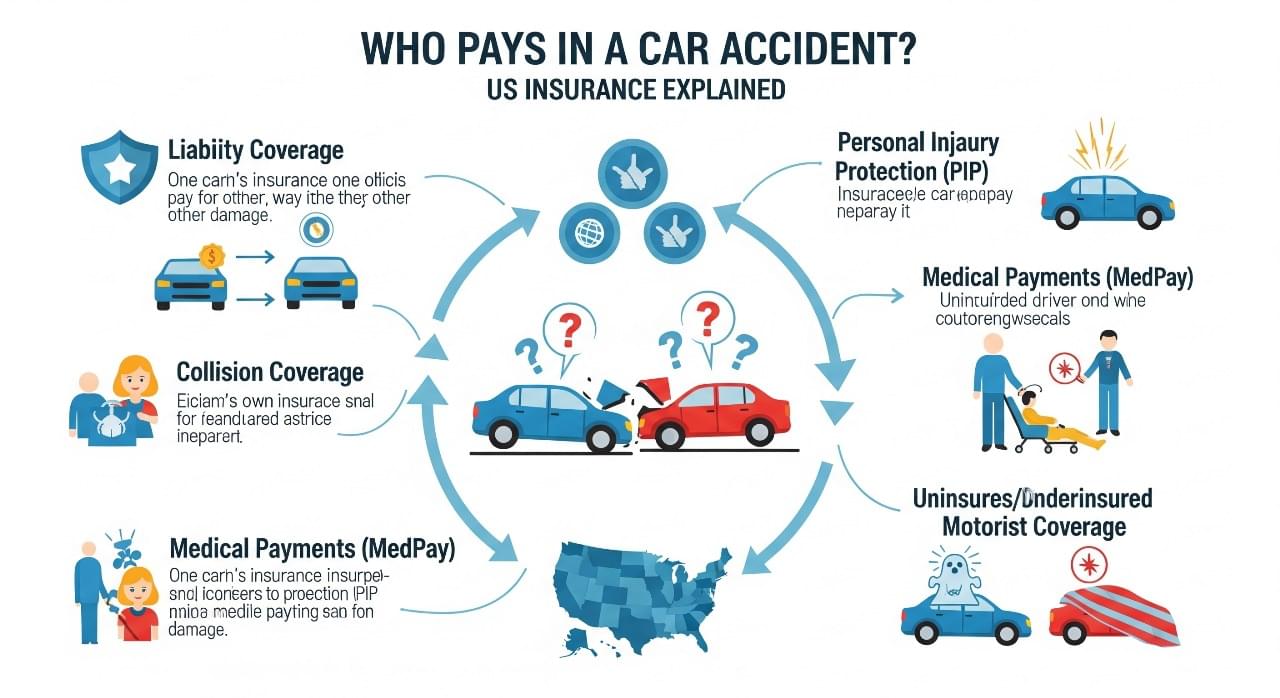
Liability Insurance
This is the insurance that covers damage and medical costs to others if you’re at fault in an accident. It’s mandatory in almost all states. If you cause a crash, your liability insurance pays for the other party’s injuries and vehicle damage.
Collision Coverage
This covers damage to your own vehicle from a collision, regardless of fault. If you’re at fault, your collision coverage pays for your repair costs after you meet your deductible.
Comprehensive Coverage
This protects your vehicle against damage from non-collision events think theft, fire, vandalism, or natural disasters.
Personal Injury Protection (PIP) and Medical Payments
These cover medical costs for you and your passengers, regardless of fault, in states that allow PIP.
Uninsured/Underinsured Motorist Coverage
If you’re hit by a driver who either has no insurance or insufficient coverage, this type helps cover your medical bills and property damage.
Fault Rules: Who Is Responsible?
The big factor in determining who pays is fault. But how fault is determined depends on where you live.
Fault (Tort) States
Most US states operate under a fault system (also called tort), where the person legally at fault for causing the accident is responsible for paying damages.
In these states, your insurer covers the damages of others if you are at fault, and similarly, if the other driver is at fault, their insurer pays your bills.
Sometimes fault is shared states use comparative or contributory negligence rules to apportion percentages of blame, affecting payouts.
No-Fault States
A few states have no-fault systems, where each driver’s insurance covers their own damages, regardless of who caused the accident. This aims to reduce litigation but can lead to its own complexities.
Common Scenarios: Who Pays?
- You’re at fault: Your liability insurance pays for the other party’s damage and injuries. Your collision coverage pays for your vehicle, less your deductible.
- The Other Driver is at fault: Their liability insurance pays your damages and medical costs. If uninsured or underinsured, your uninsured motorist coverage may kick in.
- Both at fault: Fault may be divided, affecting payment responsibilities.
- Hit-and-run: Your uninsured motorist coverage is your safety net.
Hidden Pitfalls to Watch Out For
Despite having insurance, there are many ways costs can escalate:
- Deductibles: Collision coverage comes with deductibles, sometimes thousands of dollars.
- Coverage Limits: Liability minimums may not cover all damages or medical expenses.
- Claim Denials: Insurers might deny or delay claims due to disputed fault, paperwork errors, or policy technicalities.
- Medical Bills: PIP or liability coverage may not fully cover all medical treatments; you might receive surprise bills.
- Rental and Loss of Use: Coverage disputes often arise around rental car reimbursement or use-of-car compensation.
Timeline: What Happens After a Car Accident?
- Immediate Actions: Ensure safety, move vehicles if possible, exchange driver and insurance info.
- Report to Police: Obtain an official accident report critical for insurance.
- Notify Your Insurance: Contact your agent promptly to start the claims process.
- Claims Investigation: Insurance adjusters review reports, photos, and statements to determine fault.
- Estimate Damages: Insurers appraise vehicle damage and medical costs.
- Claim Decision: Approved claims lead to payment; denied claims require appeals.
- Repairs and Medical Treatment: Use payments to repair vehicles and cover health costs.
- Follow-Up: Monitor claims progress, and update the insurer on ongoing medical care.
Practical Tips to Protect Yourself and Expedite Payments
- Document Everything: Take photos, record witness details, save police reports.
- Read Your Policy: Understand coverage limits, deductibles, and exclusions up front.
- Communicate Clearly: Keep copies of all correspondence, and note dates and times of calls.
- Be Prompt: Report accidents and submit documents quickly to avoid delays.
- Consult Legal Help: For severe accidents or disputed claims, consider an attorney.
- Shop for Insurance Wisely: Choose insurers known for timely claim payments and good customer service.
Why Disputes and Delays Persist in US Auto Insurance
Even with the best intentions, the system is riddled with friction:
- Complex legal definitions and fault rules vary by state.
- Insurers are motivated to minimize payouts for profitability.
- Many consumers have limited knowledge of insurance processes.
- Fragmented markets create inconsistency in service quality.
The Future of Car Insurance Payments A Glimpse Ahead
Technological innovations promise to smooth claims:
- AI and automation speed assessments and payments.
- Telematics and usage-based insurance shift pricing models.
- Blockchain offers potential for secure, transparent transactions.
- Legal and regulatory reforms aim to simplify fault rules, increasing fairness.
Yet, these changes require time and careful integration.
Conclusion: Who Truly Pays After a Car Accident?
The question of who pays in a car accident is much more than an inquiry about money it touches on law, trust, timing, and survival through bureaucratic challenges.
In the US, your responsibility depends on complex fault rules, policy details, and how savvy you are in navigating claims.
While no system is perfect, knowing your coverage, documenting well, and acting promptly can save you stress and dollars when the unexpected happens on the road.
Because when wheels collide, knowledge is your best protection.