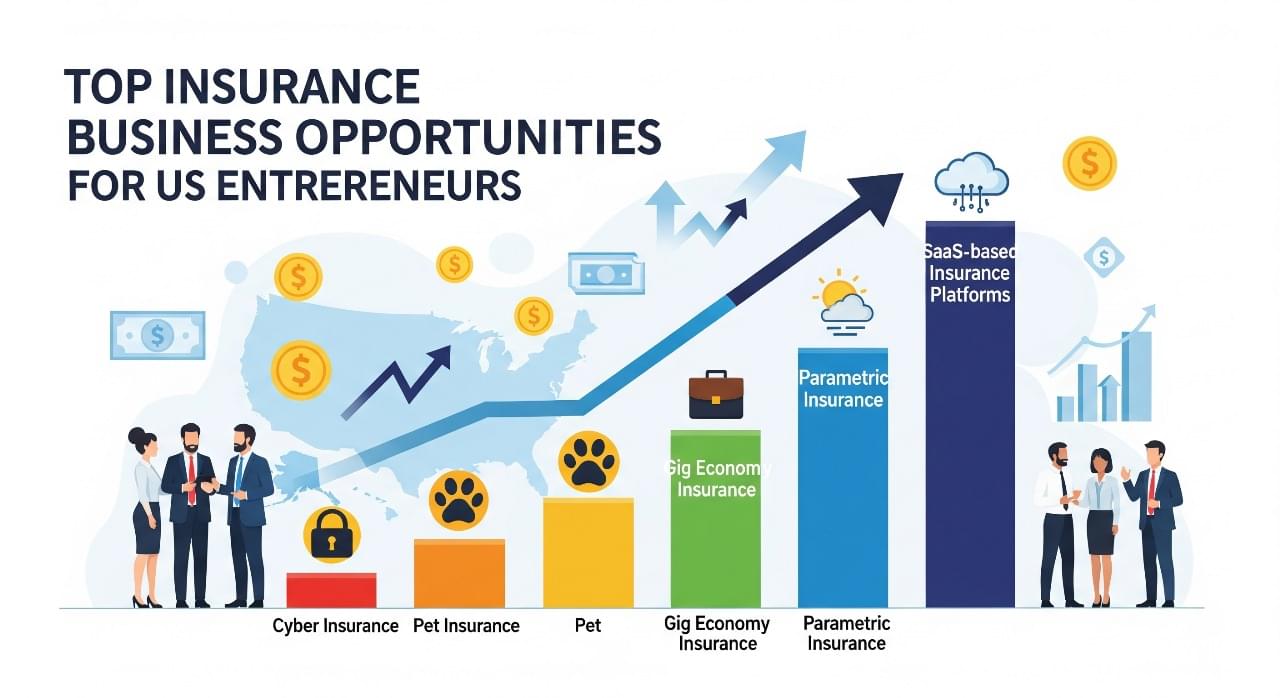
Introduction: Insurance Business Opportunities A Gold Rush or a Minefield?
The insurance industry is vast, complex, and often labeled as recession-proof, a tantalizing prospect for US entrepreneurs searching for a reliable foothold in a lucrative market. From traditional health and property coverage to specialized niches, the sector offers myriad paths toward establishing a profitable business.
Yet, beneath this dazzling potential lies a rugged landscape fraught with obstacles. The insurance field is tightly regulated, fiercely competitive, and rapidly evolving under the waves of technological disruption and changing customer expectations.
Many hopeful entrepreneurs dive in expecting a straightforward journey with easy profits. However, the reality is more sobering: steep learning curves, daunting regulatory requirements, and costly missteps await the unprepared. So, which segments truly promise opportunity in 2025? More importantly, how do you navigate this intricate terrain and emerge triumphant?
In this blog, we’ll offer a frank and critical look at the top insurance business opportunities available to US entrepreneurs today. We’ll dissect market realities, highlight common pitfalls, and share practical guidance to help you find and seize the right opportunity.
Why Insurance? Understanding the Allure
Insurance is the backbone of financial security in American life covering health, vehicles, homes, and businesses. Generating trillions of dollars in annual premiums, the US insurance market continues to expand, fueled by innovation, demographic shifts, and economic growth.
It’s seen as a hedge against economic downturns because demand for insurance remains relatively stable, even in recessions. For entrepreneurs, that stability is incredibly attractive.
Beyond revenue potential, insurance offers diversification: various product lines, recurring income from policies, and scalable models leveraging online platforms and data analytics.
Plus, insurance ventures contribute meaningfully to societal safety nets a powerful motivator for many entrepreneurs.
But attracting profitability here takes more than ambition; it demands deep strategic understanding.
Top Insurance Business Opportunities in 2025
1. Digital Health Insurance Startups
Healthcare and technology converge like never before. Digital health insurance startups are pioneering:
- Integrated telehealth services granting convenient virtual care.
- Personalized premiums informed by wearable data and AI analysis.
- Solutions targeting chronic conditions with preventive health incentives.
Challenges include strict regulatory environments and patient data privacy concerns. Success comes to those who innovate while maintaining compliance and trust.
2. Cybersecurity Insurance
Cyberattacks are no longer hypothetical they’re rampant. As businesses scramble to guard digital assets, cyber insurance has become indispensable.
Entrepreneurs can tap into:
- Policies covering data breaches, ransomware, and cyber extortion.
- Markets of small to medium enterprises that lack in-house expertise.
Key hurdles are understanding evolving cyber risks and establishing strong underwriting models in a volatile threat landscape.
3. Usage-Based Auto Insurance
IoT devices and telematics offer a game-changer insurers can now price based on actual driving behavior.
This appeals to:
- Cost-conscious drivers eager to pay only for miles or safer habits.
- Efforts to incentivize responsible driving and reduce accidents.
Building a usage-based auto insurance business demands tech partnerships and agile data analysis capabilities.
4. Environmental and Climate-Related Insurance
Climate change intensifies extreme weather events, making environmental risk insurance an urgent need.
Opportunities exist in:
- Flood, wildfire, and earthquake insurance.
- Coverage for renewable energy projects.
Entrants require keen expertise in catastrophe modeling and must navigate emerging regulatory landscapes.
5. Specialized Life and Health Products
Niches like elder care, mental health coverage, or genetics-informed plans address growing, underserved markets.
These demand:
- Advanced underwriting sophistication.
- Ethical handling of sensitive health data.
They hold promise but also require careful product design and compliance.
6. Insurance Brokerage and Aggregation Platforms
Tech-powered platforms connecting consumers to optimal plans have surged in popularity.
They leverage:
- AI-driven comparisons.
- Big data for tailored recommendations.
But competition is fierce, requiring exceptional user experience and trust-building.

Major Barriers for New Insurance Entrepreneurs
- Complex Regulatory Compliance: Navigating varying state and federal rules requires specialized knowledge.
- High Capital Requirements: Significant upfront investment supports solvency standards and operations.
- Building Credibility: Trust is earned over time; incumbents dominate long-trusted markets.
- Technology Integration: Keeping pace with AI, cloud computing, and data security is costly and essential.
- Meeting Modern Customer Expectations: Today’s consumers demand transparency, accessibility, and swift service.
- Talent Acquisition: Scarce qualified actuaries, underwriters, and data scientists increase hiring challenges.
Timeline: From Idea to Insurer
- Concept & Market Research: Define niche, assess demand, and competitive landscape.
- Business Planning: Financial modeling, regulatory strategy, sales and marketing plan.
- Licensing and Regulatory Approval: Acquire necessary licenses and capital certifications.
- Infrastructure Build: Implement IT systems, staffing, and operational workflows.
- Product Development: Design insurance offerings tailored to target market needs.
- Market Launch: Activate sales channels and begin customer acquisition.
- Growth & Compliance: Monitor performance and adapt to evolving regulatory requirements.
Strategies for Entrepreneurial Success
- Focus on Unique Value: Solve unmet needs or innovatively disrupt traditional models.
- Forge Strong Partnerships: Collaborate with insurers, healthcare providers, and tech firms.
- Invest in Customer Experience: Transparency and simplicity drive trust.
- Harness Analytics: Use data-driven insights for precision pricing and risk management.
- Keep Capital Reserves Ready: Expect initial losses; adequate funding is essential.
- Stay Agile: Regulatory changes and market dynamics demand continuous pivoting.
Why Many Fail to Thrive
- Underestimating regulatory hurdles and capital demands.
- Overestimating brand recognition and customer acquisition ease.
- Relying solely on conventional sales without digital transformation.
- Skimping on industry expertise leads to mispriced risks.
- Neglecting market research yielding poorly aligned offerings.
The Future Landscape: Opportunities Await
Emerging trends point to vibrant prospects for savvy entrepreneurs:
- AI and machine learning reshaping underwriting and claims.
- Blockchain enhancing transparency and fraud prevention.
- Personalized wellness incentives linking health and insurance.
- Expanding coverage into underinsured demographics.
Those who balance innovation with compliance and customer focus will thrive.
Conclusion: Insurance Business Opportunities Navigating a Complex Yet Rewarding Field
The insurance sector offers impressive opportunities for entrepreneurs ready to navigate its complexities.
Success in 2025 and beyond requires marrying deep industry knowledge, technological savvy, and relentless customer focus.
While barriers are high, the rewards financial, societal, and professional can be significant for those who approach with eyes wide open.
For visionaries willing to endure the challenges, building an insurance business is more than a venture it is a chance to shape the future of financial peace and security for millions.