
Introduction: Starting an Insurance Business in the USA Opportunity or Overwhelming Challenge?
Launching an insurance business in the United States can seem like a lucrative venture. After all, insurance touches almost every aspect of American life from health and auto to home and life. The demand is constant, and the potential for profit appears immense.
Yet, beneath the surface of potential profits lies a complex web of regulations, fierce competition, and operational challenges. Starting an insurance business isn’t simply about selling policies. It requires navigating a highly regulated environment, securing licenses, managing risk pools, and building trust among skeptical consumers.
Many entrepreneurs enter the space lured by the promise of steady income and scalability, only to discover a labyrinth of bureaucratic hurdles and market saturation.
This blog offers a critical, no-nonsense look at what’s really involved in starting an insurance business in the USA. We’ll unpack the regulatory landscape, practical steps, common pitfalls, and essential strategies to set you up for success in 2025 and beyond.
Understanding the Insurance Industry Landscape
The US insurance industry is a trillion-dollar market, tightly regulated at both federal and state levels. It encompasses various segments:
- Life Insurance
- Health Insurance
- Property and Casualty Insurance (housing, auto, liability)
- Specialty lines like cyber insurance or pet insurance
Each segment operates under distinct rules, licensing requirements, capital standards, and consumer expectations.
The sector is competitive, with dozens of established players dominating large swaths of the market. Entering and sustaining a foothold demands deep domain knowledge, robust capital, and strategic acumen.
Regulatory Hurdles and Licensing Requirements
One of the first and most significant challenges is complying with the fragmented, complex regulatory environment.
- State-Based Licensing: Insurance is primarily regulated at the state level. Entrepreneurs must obtain licenses in each state they plan to operate, meeting strict educational and testing criteria. This process can be time-consuming and costly.
- Financial Solvency: Regulators require new insurers to demonstrate strong financial backing to cover claims. This often means substantial capital reserves and ongoing financial reporting.
- Compliance with Consumer Protection Laws: Companies must navigate consumer disclosure requirements, privacy rules, and anti-discrimination laws.
- Navigating Federal Regulations: Especially in areas like health insurance (under the ACA), federal laws impose additional layers of complexity.
For startups and small businesses, juggling these requirements can be daunting.
Building the Business Infrastructure
Beyond licensing, several critical operational components must be established:
- Risk Management and Underwriting: Accurate risk assessment is vital. A misguided underwriting policy can lead to catastrophic losses.
- Claims Processing Systems: Efficient, transparent claims handling affects customer satisfaction and regulatory compliance.
- Sales and Distribution Networks: Whether through captive agents, independent brokers, or digital platforms, building trusted channels is essential.
- Technology Infrastructure: Modern insurance relies heavily on data analytics, customer portals, and AI tools—all requiring significant investment.
- Marketing and Branding: Insurance is a trust-based industry. Differentiating your business amid incumbents needs thoughtful branding and outreach.
Financing and Capital Requirements
Starting an insurance business is capital intensive. Aside from regulatory reserve mandates, funds are needed for:
- Licensing and legal expenses
- Technology development and maintenance
- Staffing and training
- Marketing campaigns
- Operational costs before premium inflows balance out
Securing adequate funding whether personal savings, loans, or investors is a make-or-break factor.
Challenges Unique to Insurance Startups
- Market Entrenchment: Large insurers benefit from established reputations, scale economies, and data heft.
- Customer Skepticism: Insurance is inherently complex and customer trust hard-earned.
- Regulatory Uncertainty: Evolving laws (e.g., around health reform or data privacy) can disrupt plans.
- Talent Shortages: Recruiting knowledgeable underwriters, actuaries and compliance experts is competitive.
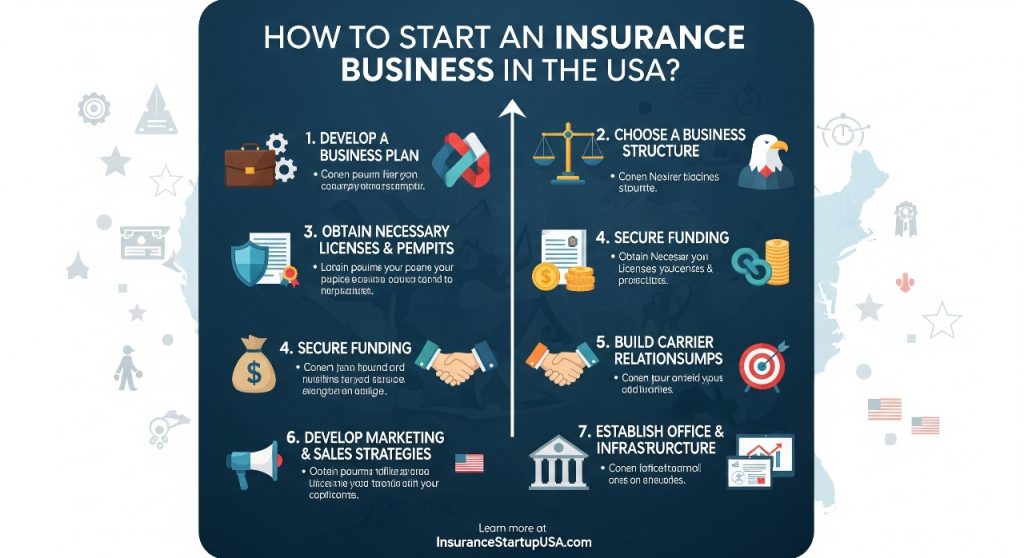
Timeline: Step-By-Step to Launch Your Insurance Business
- Market Research and Business Planning: Understand your niche, competition, and target market. Draft a comprehensive business plan.
- Financing and Capitalization: Secure your startup funds covering regulatory and operational needs.
- Licensing and Regulatory Approval: File applications in your state(s) and obtain necessary approvals.
- Infrastructure Development: Build IT systems, hire staff, develop underwriting guidelines.
- Product Design and Pricing: Craft insurance products that meet market needs while balancing risk and profitability.
- Marketing and Distribution Setup: Launch branding efforts and sales strategies.
- Go Live and Monitor: Begin underwriting policies, processing claims, and refining operations.
- Continuous Compliance and Growth: Stay abreast of regulation changes and market dynamics to grow sustainably.
Strategies for Success in a Competitive Market
- Niche Focus: Target underserved populations or specialty insurance lines.
- Embrace Technology: Leverage AI, telematics, and data analytics for better risk management and customer engagement.
- Transparent Customer Service: Simplify policies and offer clear communication to build trust.
- Partnerships: Collaborate with healthcare providers, brokers, and tech firms.
- Agility: Quickly adapt to regulatory changes and consumer trends.
Why Many Insurance Startups Struggle and Fail
Despite the growing insurance market, many startups falter due to:
- Underestimating regulatory complexity and costs
- Insufficient capital to weather early losses
- Lack of domain expertise in insurance underwriting or claims
- Poor customer acquisition strategies
- Failure to build trustworthy brand presence
Understanding these pitfalls before diving in is crucial.
The Future of Insurance Business in the USA
The insurance industry is transforming. Emerging trends include:
- Digital-first insurance models
- Personalized insurance driven by big data
- Direct-to-consumer and subscription models
- Increased focus on health and wellness integration
Startups that innovate and align with these forces while navigating regulatory landscapes may thrive in the coming years.
Conclusion:
Building an insurance business in the USA carries undeniable promise. The demand is vast and diverse, and the sector is ripe for innovation.
But the journey is long, costly, and strewn with obstacles. The labyrinth of licensing, capital requirements, and operational complexities demands grit, expertise, and strategic foresight.
For entrepreneurs serious about insurance, thorough preparation, a robust plan, and relentless perseverance are non-negotiable.
With the right approach, you can enter this vital industry not just as an insurer, but as a trusted partner in your customers’ lives and a driver of better health and security.