Introduction: Will Health Insurance Cover Breast Reduction? A Quest Marked by Obstacles and Hope
For countless women struggling with the physical and emotional toll of excessively large breasts, breast reduction surgery known medically as reduction mammaplasty is far more than a cosmetic choice. It’s a vital intervention that offers reprieve from chronic neck, back, and shoulder pain; improves posture; and dramatically enhances quality of life.
Yet, a critical question haunts many: “Will my health insurance cover breast reduction?” The answer, unfortunately, is not straightforward.
In the United States, where healthcare expenses continue to soar, navigating insurance coverage for breast reduction can feel like entering a battlefield of denials, endless paperwork, and confusing policy language.
Despite promises of coverage for medically necessary procedures, even some well-intentioned insurers often label breast reduction as cosmetic, denying claims or covering only a fragment of the cost. The result? Many women are forced to shoulder debilitating bills or delay surgery that could change their lives.
This blog seeks to shed light on the realities surrounding breast reduction insurance coverage in 2025, exposing the systemic hurdles patients face and arming you with knowledge and strategies to advocate effectively for the coverage you deserve.
Understanding Breast Reduction Surgery: More Than Just Aesthetics
Breast reduction surgery involves the removal of excess breast tissue, fat, and skin, reducing breast size to alleviate health burdens. It’s aimed at treating:
- Persistent pain in the neck, back, and shoulders caused by large breasts
- Skin irritations and infections beneath the breast fold
- Postural abnormalities that impede daily activities
For many women, breast reduction is not about vanity it’s a medical necessity crucial to their physical and mental well-being.
When Does Health Insurance Cover Breast Reduction?
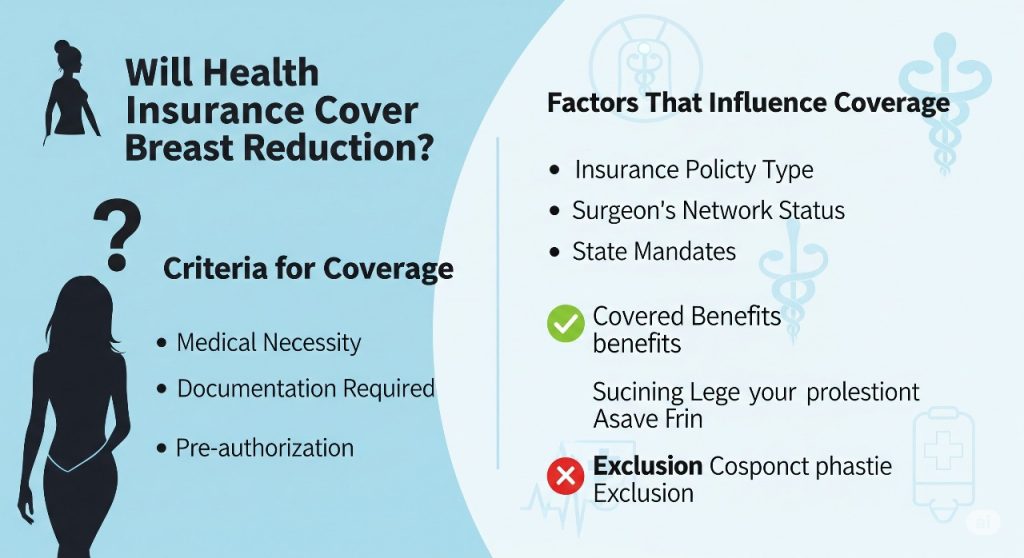
The linchpin to insurance coverage is medical necessity. Insurers generally cover breast reduction only if:
- There is well-documented physical discomfort linked directly to breast size.
- Previous conservative measures, such as physical therapy or medications, have failed to relieve symptoms.
- There is clear evidence often photographic demonstrating problems like skin breakdown or mobility restrictions.
Simply wanting a smaller breast size for cosmetic reasons rarely meets insurers’ criteria.
The Harsh Reality of Securing Insurance Coverage
1. Exhaustive Documentation Requirements
Insurance companies demand detailed proof including:
- Physician’s notes meticulously outlining symptoms and impact on life.
- Records of all prior non-surgical treatments undertaken.
- Photographic evidence showcasing the severity of the condition.
Without irrefutable documentation, claims are routinely rejected.
2. Caps and Limits on Coverage Amounts
Even when coverage is approved, insurers impose dollar limits on the amount covered or restrict hospital days and ancillary services. Patients often find themselves facing staggering out-of-pocket costs despite “insurance.”
3. The Grueling Appeal Process
Claim denials are common. Overturning them requires perseverance, submission of supplementary evidence, and sometimes legal support a daunting and emotionally taxing journey.
4. Geographic and Plan Variability
Coverage heavily depends on where you live. States with insurance mandates may offer better access, while others leave women scrambling. Plan-by-plan differences add another layer of complexity.
Navigating the Complex Path: A Timeline for Insurance Coverage
- Initial Consultation: Discuss symptoms and treatment options with your healthcare provider.
- Preparation of Documentation: Collect medical records, photos, and specialist letters required by insurers.
- Pre-Authorization Request: Submit detailed paperwork to the insurance company seeking approval.
- Insurance Review & Response: Expect back-and-forth queries and potential denials.
- Appeals Process: Organize additional evidence and persist in contesting any denials.
- Surgery Scheduling: Once approved, coordinate your surgical procedure and plan recovery.
- Post-Operative Follow-Up: Manage ongoing claims for aftercare and possible complications.
Practical Tips for US Consumers on Securing Coverage
- Know Your Plan Thoroughly: Understand your insurer’s policies on cosmetic versus medically necessary procedures.
- Partner with Your Healthcare Provider: Request detailed letters emphasizing the medical necessity of your surgery.
- Maintain Organized Records: Keep a complete file of all medical records, communications, and photos related to your condition.
- Don’t Fear Appeals: Persistence often turns initial no’s into approvals.
- Reach Out for Help: Use state insurance consumer assistance programs and legal counsel if needed.
- Financial Planning: Prepare for possible out-of-pocket costs and seek assistance programs.
Why Coverage for Breast Reduction Remains a Contentious Issue
- Cost Concerns: High surgical costs motivate insurers to apply stringent scrutiny.
- Cosmetic vs Medical Debate: The stigma and misunderstanding around breast size issues fuel coverage denials.
- Lack of Uniform Guidelines: The absence of nationwide standards leads to inconsistent insurer decisions.
- Social Bias: Historically, women’s pain related to breast size has been undervalued medically and socially.
Conclusion: Breast Reduction Coverage: Essential Surgery Impeded by Systemic Barriers
Breast reduction is often a critical medical procedure, not an optional cosmetic choice, delivering profound relief and healthier living.
Yet, the US health insurance system in 2025 remains a minefield filled with bureaucratic hurdles, opaque guidelines, and limited access. Achieving coverage requires a well-prepared, proactive approach combined with stamina to navigate appeals and paperwork.
More broadly, systemic reforms are needed to harmonize policies, dispel stigma, and ensure equitable coverage for those whose health and quality of life depend on this vital surgery.
Until then, the path may be challenging, but the benefits of persistence and advocacy far outweigh the struggle, leading to restored health, comfort, and confidence.